
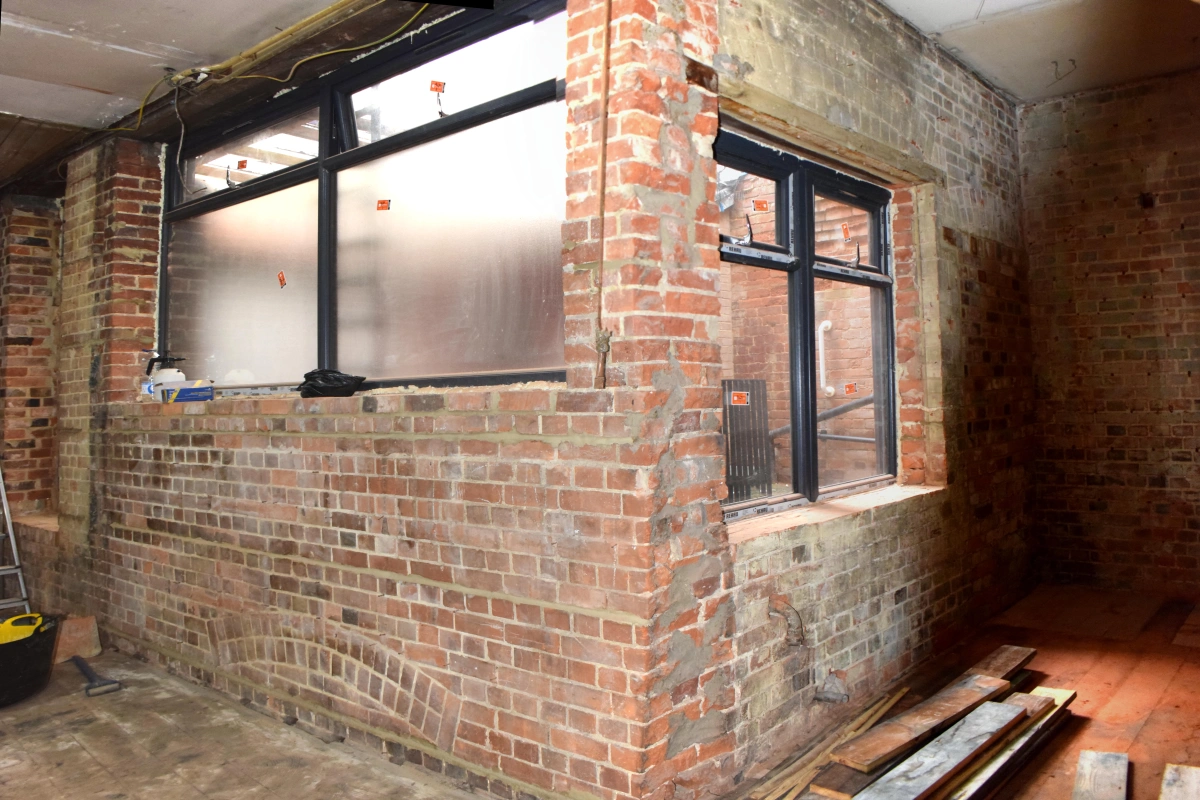
Navigating the planning process for a historic or period property in the UK can be a complex and often daunting experience. Conservation officers and planning departments operate under strict national and local policies designed to protect our built heritage.
A recent case study highlights several critical mistakes that often lead to refused applications, or worse, enforcement action for unauthorised works. Below are the key takeaways to ensure your heritage project remains on the right track.
1. Don’t ignore the breathability principle
Many owners mistakenly apply modern construction methods to pre-1919 buildings. Using cement, gypsum plasters, or plastic-based paints on traditional fabric is a common pitfall.
The risk
These materials are impermeable and trap moisture within the walls, leading to structural rot, spalling (flaking of masonry), and sulfate attack.
The heritage requirement
Conservation officers will almost always require the use of traditional, breathable materials like lime mortar, lime plaster, and vapour-permeable paints. Using modern materials is not just poor practice; it is harmful to the building’s historic significance.
2. Evidence is everything
It was like that when I bought it is not a valid legal defence for unauthorised works.
The pitfall
Assuming the Council will accept your word regarding previous alterations, like basement tanking or uPVC window installation.
The requirement
You must provide evidence, such as historic deeds, photographic records predating your ownership, or dated correspondence, to prove that you were not responsible for the harm. Without this, you become legally and financially liable for reversing these unauthorised works.
3. Cost and convenience are not material planning considerations
A common mistake is arguing that a proposal should be approved because it is cheaper or consistent with what the neighbours have done.
The reality
Conservation Officers are focused on the significance of the specific building. Arguments based on personal financial constraints or custom and practice in the area hold little weight unless supported by a formal viability report. If a design is not heritage-compliant, the cost of the materials is secondary to the preservation of the asset.
4. Precision matters
Vague narratives and poor-quality documentation are reasons for refusal.
The standard
Your architectural drawings must be high-resolution, clearly labelled, and colour-coded. Every intended change must be explicit.
The pitfall
Leaving ambiguity in your application. If the drawing labels are missing, the Planning Officer cannot accurately assess the impact of the work, and the application will likely be delayed or rejected.
5. Understand conservation gain
If you have inherited a property with inappropriate past alterations, you cannot simply regularise them by submitting a new application.
The strategy
To gain permission, you often need to demonstrate conservation gain. This means you must commit to reversing harmful past works. For example, removing impermeable basement tanking or concrete floors and restoring original features.
The lesson
Approaching the process as a way to fix the building’s fabric, rather than just getting approval for current works, is the most successful route to a positive decision.
6. Retain professional expertise early
Heritage planning is a niche field that requires a blend of architectural, historical, and strategic expertise.
The pitfall
Resisting professional advice or questioning the necessity of conservation-led requirements.
The advice
When a specialist advises that an application is likely to fail, they are usually identifying a mismatch between your goals and statutory requirements. Ignoring these warnings, such as the need for specific drainage solutions or structural investigations, often leads to the withdrawal of professional support and an inevitable planning refusal.
If you are planning work on a listed building or a property within a conservation area, always seek professional heritage consultancy before commencing any site works. Proactive engagement with your local conservation officer is usually the most efficient path to securing your planning permission.
Are you currently navigating a planning application, and if so, have you already received formal feedback from your local Conservation Officer? Contact us!
No Responses